Visuals
Downtown feasibility
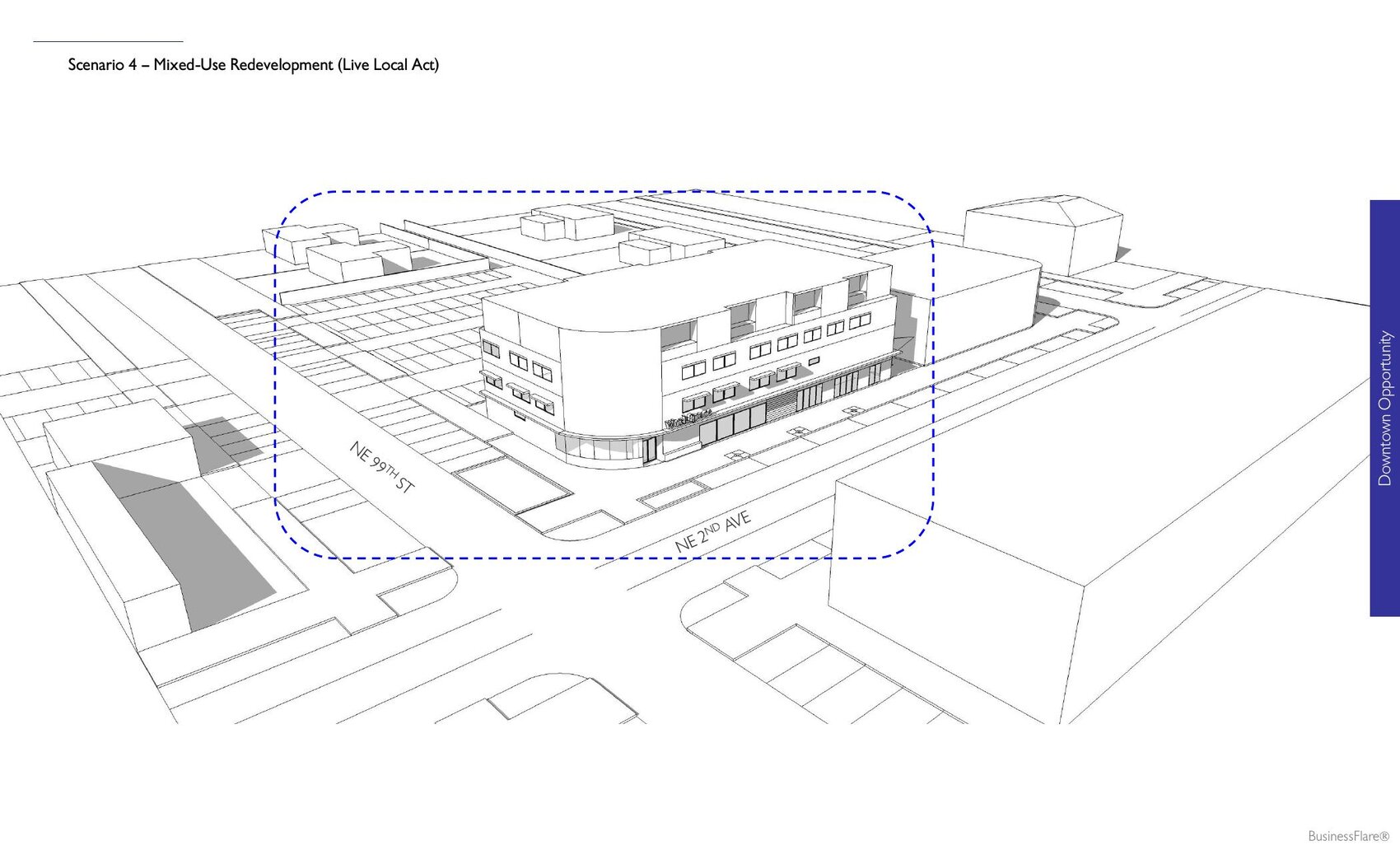
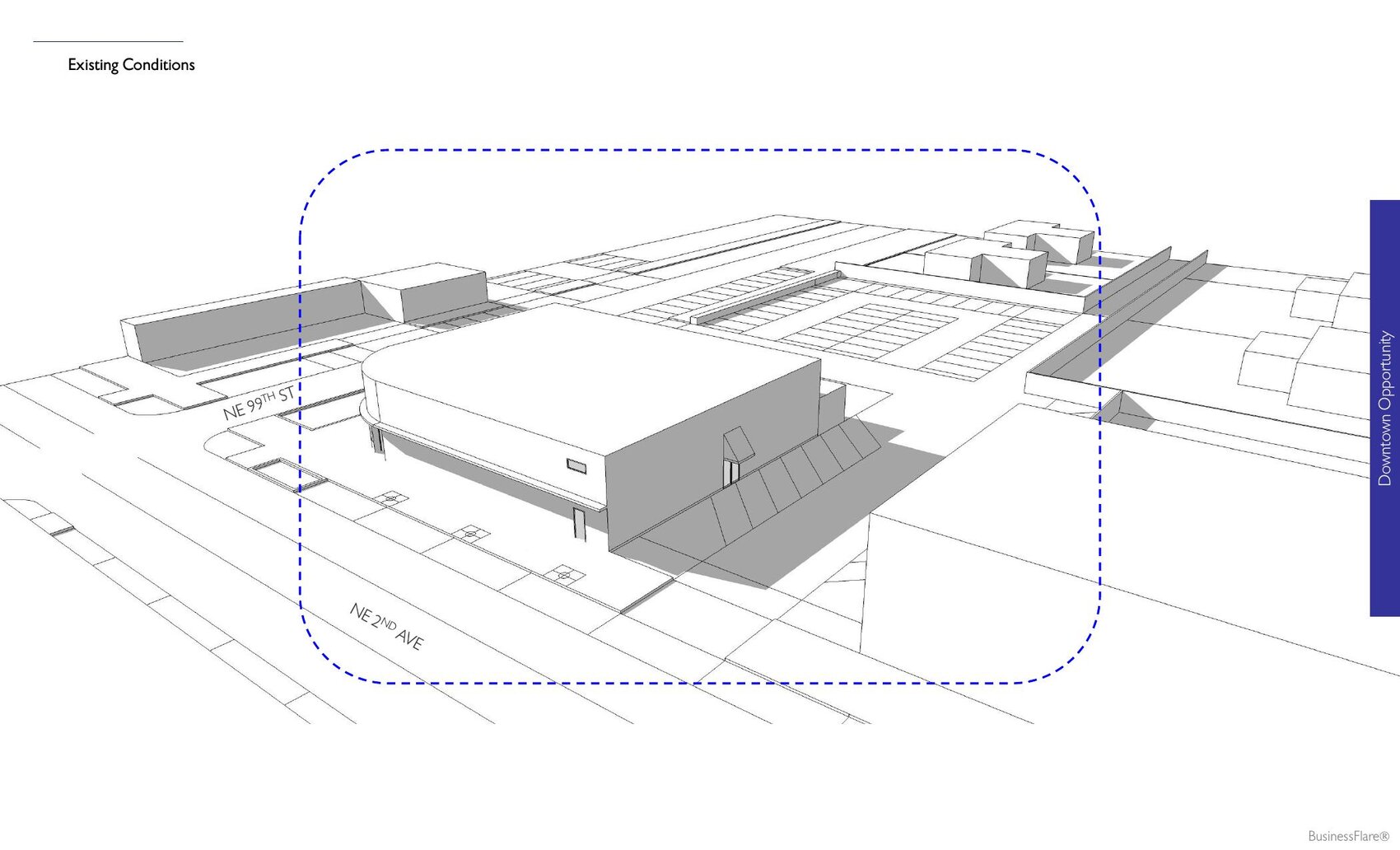
A market-grounded look at Downtown Miami Shores and the Village-owned site at 9900 NE 2nd Avenue — what the data says the district can support, and five tested ways to redevelop the property.
BusinessFlare® evaluated the market conditions of Downtown Miami Shores — the B-1 commercial corridor along NE 2nd Avenue between NE 94th and NE 101st Streets — to inform the future of the Village-owned property at 9900 NE 2nd Avenue and identify broader revitalization opportunities. The analysis combined CoStar real-estate data, MLS trends, foot-traffic analytics, and demographic modeling.
The picture is one of affluence without amenity: households within a five-minute walk earn a $122,000 median income and account for 25% of the area's purchasing power, yet Downtown holds just 162,000 square feet of aging retail in buildings averaging a 1953 vintage. Demand exists, space does not — and the study translates that gap into concrete redevelopment options for the 9900 site.
Downtown Miami Shores has the customers and purchasing power to support a more vibrant district, but is constrained by limited, older building stock and no critical mass of ground-floor activity. Unmet demand is concentrated in food and beverage and entertainment. The 9900 NE 2nd Avenue site can be a catalyst, but every redevelopment scenario is highly sensitive to land cost, interest rates, and a referendum requirement for leases beyond ten years.
From market observations through 3D massing and pro-forma testing to a disciplined roadmap for the Village-owned site.
The study defined Downtown's primary markets as residents within a 5-minute walk or bike ride and those within a 5-to-7-minute drive, with Downtown North Miami and Little River as the main competition.
Foot-traffic analytics showed 276,000 individuals visited Downtown over 12 months, an average of 5.5 times each, for roughly 1.5 million customer visits — plus about 206,000 additional visits from ~1,300 Downtown workers.
Across 23 buildings and ~329,600 leasable square feet, Downtown showed limited availability, older stock, and rents that lagged the surrounding market despite strong demographics.
The 31,000-square-foot site (three parcels) was tested through five conceptual scenarios with 3D massing and pro-forma workouts, each evaluated under both a sale and a long-term ground-lease structure.
The Next Steps memo laid out the key challenges — renovation cost, the 10-year lease referendum threshold, and community sentiment — and a measured sequence for testing real interest before any commitment.